
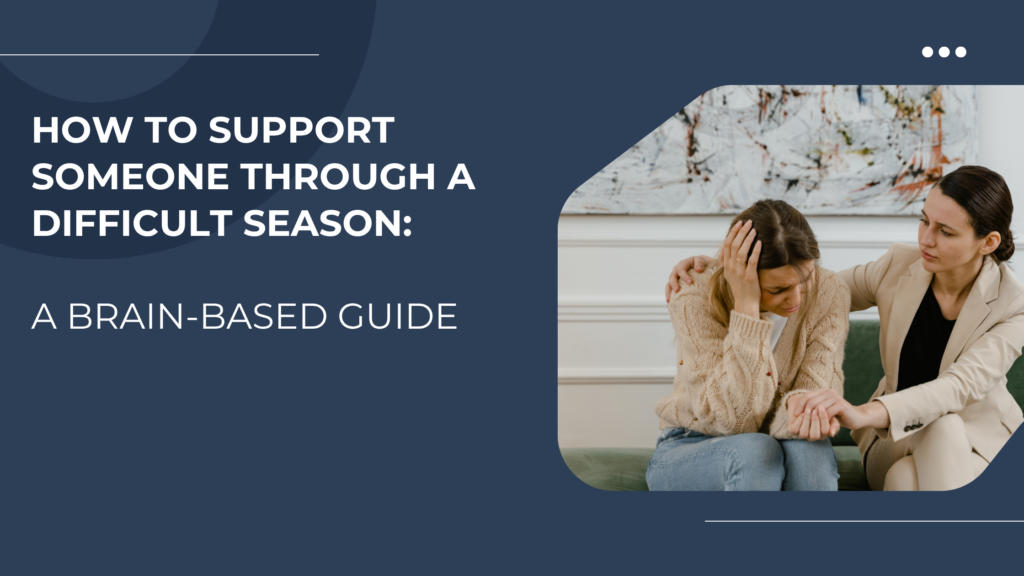
When someone we love is hurting, we want to help. We look for the right words. We search for a fix. We offer advice, ideas, and plans. It all comes from a good place.
But here is something many people find surprising. Supporting someone through a hard time is not about having perfect words or finding the solution. Often, the most powerful thing we can do is stay calm, stay present, and listen. We can resist the urge to fix what the other person is feeling.
This matters for brain health too. When a person is overwhelmed, anxious, grieving, or under heavy stress, their brain is in a protective mode. Feeling safe and connected can help create the conditions the brain needs to begin settling again.
In this blog, we explain this in simple words. You will learn why fixing does not always help, how your own calm affects another person, what to say and what to avoid, and how to care for yourself while you support someone else. You will also see how The Brain Performance Center® in Dallas, Texas supports people and families through hard seasons.
Why We Want to Fix Things
If you are the kind of person who jumps in with advice, you are not doing anything wrong. Wanting to fix a problem is a sign of love and care. It is also a sign that you feel uncomfortable seeing someone in pain.
Pain Is Hard to Watch
When someone we care about is suffering, our own brain reacts. We feel tense, helpless, and worried. Fixing the problem feels like a way to make that discomfort go away, both for them and for us.
Why Quick Fixes Often Miss the Mark
The problem is that a fix can feel like a message. When someone says, “You should just try this,” the other person may hear, “Your feelings are too much,” or “You are doing it wrong.” They may feel unheard or even a little ashamed.
Most people in a hard season already have plenty of advice. What they often need is someone who will sit with them and not run away from the hard feelings.
What Happens in the Brain During a Hard Season
To understand why presence helps, it is useful to know what the brain does under stress.
The Fight, Flight, Freeze Response
When the brain senses danger or overload, it switches into survival mode. This is the fight, flight, or freeze response. Your heart beats faster, your muscles tighten, and your attention narrows to look for threats.
Anxiety can feel like constant worry and being overwhelmed. It is often a sign that the nervous system is overactive. Grief, loss, big life changes, and long periods of pressure can all trigger the same response.
Why Thinking Gets Harder Under Stress
In survival mode, the thinking part of the brain does not work as well. Planning, problem-solving, and clear decision-making become harder. This is why a stressed person may seem forgetful, short-tempered, or unable to “just do the simple thing.”
It also explains why logical advice often does not land. The person is not ignoring you. Their brain is simply not in a state where it can use it yet.
The Brain Needs Safety First
Before the brain can think clearly, it needs to feel safe. When the body gets signs of safety, such as a calm voice, a steady face, and a gentle presence, the survival response can start to ease. Only then can the thinking part of the brain come back online.
This is why connection comes before solutions.
Co-Regulation: How Your Calm Helps Someone Else
There is a simple idea in brain science that helps here. It is called co-regulation. It means that one person’s calm nervous system can help another person’s nervous system settle.
You See This With Babies
Think of a crying baby. A calm parent picks them up, speaks softly, and slowly the baby relaxes. The baby cannot calm down alone, but the parent’s calm helps them find theirs. Adults are not that different. We never fully outgrow the need for safe people.
Your State Is Contagious
Stress spreads quickly between people. If you walk into a hard conversation tense and worried, the other person’s brain picks up on it. But the opposite is also true. When you are steady, your body sends the message, “It is safe here.”
Regulate Yourself First
This is why the first step in supporting someone is to look after your own response. Before you speak, take a breath. Notice how you feel. Are you tense? Worried? Rushing to fix it?
A few simple steps can help:
- Take one slow breath, with a longer breath out than in
- Relax your shoulders and jaw
- Slow down your voice
- Remind yourself, “I do not need to solve this right now”
You do not have to be perfectly calm. You only need to be a little steadier than the moment.
Simple Ways to Be a Safe Place for Someone
Being a safe place does not take special training. It takes a few simple habits.
Stay Present
Put your phone away. Face the person. Let your body say, “I am here.” Presence is more powerful than any speech. Even sitting together in quiet can be deeply comforting.
Listen Without Rushing
Let the person talk, even if they repeat themselves. Try not to interrupt or jump ahead. Listening is not passive. It tells the person, “You matter, and what you feel makes sense.”
Let Silence Be Okay
Many of us rush to fill quiet moments. But silence can give a person room to feel and think. You do not need to talk every second.
Reflect Back What You Hear
Simple reflection helps people feel understood. You might say:
- “That sounds really heavy.”
- “It makes sense that you feel overwhelmed.”
- “I can hear how hard this has been.”
You do not need to agree with every detail. You are just showing that you hear them.
Ask Before You Offer Advice
Instead of jumping in with a fix, try asking, “Do you want me to listen, or would you like ideas?” This small question gives the person control, which is important when life feels out of control.
Be Steady and Show Up Again
Support is not a one-time talk. A short text, a shared meal, or a quiet walk next week can mean a lot. Hard seasons are often long, and steady presence matters more than big gestures.
What to Say and What to Avoid
Words still matter, even if they do not need to be perfect. Here are some simple guides.
Helpful Things to Say
- “I am here with you.”
- “You do not have to explain it all. I am listening.”
- “That sounds so hard.”
- “Thank you for telling me.”
- “What would feel supportive right now?”
- “I do not have the answers, but I am not going anywhere.”
Things That Often Do Not Help
- “Everything happens for a reason.”
- “Just stay positive.”
- “At least it is not worse.”
- “I know exactly how you feel.”
- “You should just…”
- “You are overreacting.”
These phrases often come from care. But they can leave the person feeling dismissed. Try to swap a quick fix for a moment of connection.
When You Do Not Know What to Say
It is okay to say, “I do not know what to say, but I care about you and I am here.” Honesty feels better to most people than a perfect line.
Supporting Different People in Different Seasons
Every person and every hard season looks a little different. Here are a few common ones.
Someone Who Is Anxious
A person with anxiety may feel stuck in worry and may seek reassurance again and again. Stay calm, speak slowly, and avoid feeding the fear with long arguments. A gentle “I am here, and we can take this one step at a time” can be very settling.
Someone Who Is Grieving
Grief has no schedule. Do not try to hurry it or look for a bright side. Say the name of the person they lost. Share a memory if it feels right. Check in weeks and months later, when others have gone back to normal life.
Someone Who Feels Low or Depressed
Depression can feel like heaviness or running on empty. Motivation may be very low. Small, kind invitations work better than big pushes. Offer a short walk, a simple meal together, or just company. Gently let them know you are not judging.
Someone Under Heavy Stress
Work pressure, money worries, caring for others, and big changes can wear a person down. Offer practical help when you can, such as a meal or a school pick-up, but let them guide what is useful.
A Child or Teenager
Young people may not have the words for what they feel. Stay calm, keep your voice soft, and avoid lectures. Let them know their feelings are allowed. Often, they open up when they feel safe, and that may be during a car ride or a walk, not a formal talk.
Take Care of Yourself Too
Supporting someone can be tiring. You cannot pour from an empty cup.
Notice Your Own Limits
If you feel drained, short-tempered, or anxious yourself, take it as a signal. Caring for others does not mean ignoring your own needs.
Build Your Own Support
Talk to a trusted friend or family member. Keep up your sleep, food, and movement. Take small breaks. Your steady brain is the gift you bring to the other person.
You Are Not Their Therapist
You can be a safe and caring presence without being responsible for fixing or treating the other person. It is healthy to set kind limits, and to encourage professional help when needed.
When to Encourage Professional Help
Care from loved ones is powerful. But sometimes more support is needed. Gently encourage professional help if the person:
- Has been struggling for a long time without relief
- Has trouble with sleep, focus, or daily tasks
- Seems stuck in anxiety, panic, or deep sadness
- Has had a brain injury, big loss, or trauma
- Is pulling away from the people and things they love
- Is using alcohol or other substances to cope
How to Bring It Up Kindly
Choose a calm moment. Start with care, not criticism. You might say, “I care about you, and I have noticed how hard this has been. Would you be open to talking with someone who can help?” Offer to help find a provider or even sit with them while they make the call.
If Someone Is in Crisis
If someone talks about wanting to end their life or hurting themselves, take it seriously. In the United States, you can call or text 988 to reach the Suicide and Crisis Lifeline at any time. If there is immediate danger, call 911.
How The Brain Performance Center Can Help
The Brain Performance Center® is based in Dallas, Texas. We offer personalized and innovative care that helps people improve focus, mood, and overall quality of life. Both in-person and virtual appointments are available.
Our approach rests on a simple idea: caring for your brain is Brain Capital®. When a person feels safe, supported, and understood, their brain has more room to heal and grow. We help people build on that foundation with brain-based tools.
Cognitive Behavioral Therapy (CBT)
CBT is an evidence-based approach that helps you notice and change the thought patterns that shape your feelings and actions. Negative thoughts can happen so fast that they feel true. CBT teaches people how to catch them and replace them with healthier ones. It is a helpful tool for anxiety, low mood, and the heavy thinking that comes with hard seasons.
Neurofeedback
Neurofeedback is a brain-based form of biofeedback that helps regulate how your brain functions. Stress, trauma, injury, and genetics can disrupt healthy brain patterns, which can lead to challenges with mood, focus, and decision-making. Neurofeedback helps retrain the brain toward healthier regulation, which supports clearer thinking and emotional balance. Learn more on our Treatment Solutions page.
LENS (Low Energy Neurofeedback System)
LENS is a gentle form of neurofeedback. A small sensor is placed on the scalp to measure brainwave activity and send a brief, low-energy signal. This helps the brain self-regulate, organize, and calm down. LENS can support improvements in anxiety, depression, mood, energy, focus, insomnia, and mental clarity.
Support Through Neuroplasticity
Your brain can change and adapt through life. This is called neuroplasticity. It means that even after a long, hard season, the brain can form new, healthier patterns. This is a message of real hope for people who feel stuck and for the people who love them.
Conditions We Support
Our team supports people with many concerns. You can read more on our Conditions page, including anxiety, depression, ADHD, autism spectrum, and insomnia.
Executive Function Training
Hard seasons often make it harder to focus, plan, and make decisions. Our Executive Function Training program helps strengthen focus, cognitive control, decision-making, and resilience under pressure. It can help leaders, caregivers, and professionals who feel stretched too thin.
In-Person and Virtual Care
You can visit us in Dallas or meet with us online. Selected insurance coverage is now available for in-person and virtual counseling sessions. Learn more on our Virtual Services page.
Meet Dr. Leigh Richardson and the Team
The Brain Performance Center® is led by Dr. Leigh Richardson. She is a frequent speaker and guest on national radio and television, and the author of The Depleted Brain. Clients often describe the team as warm, kind, and supportive, and say that Dr. Leigh explains brain science in a simple and caring way. You can read more on our Meet the Team page and see what clients say on our Reviews page.
Frequently Asked Questions
What is the best way to support someone who is struggling?
Stay calm, stay present, and listen. Let the person share without rushing to fix things. Ask what would feel helpful, and keep showing up over time.
Why does listening matter more than giving advice?
When a person is stressed, the thinking part of their brain is less active, so advice may not land. Feeling heard and safe helps the brain begin to settle, and then problem-solving becomes easier.
What does it mean to be a safe place for someone?
It means being a steady, kind, non-judging presence. The person can share their feelings without fear of being fixed, corrected, or dismissed.
What is co-regulation?
Co-regulation is when one person’s calm nervous system helps another person’s nervous system settle. It is how parents calm babies, and it continues to help us as adults.
What should I avoid saying to someone who is struggling?
Try to avoid phrases that rush or dismiss, such as “just stay positive,” “at least it is not worse,” or “you should just.” Simple, honest care works better.
How do I know if the person needs professional help?
If the struggle lasts a long time, affects sleep, focus, or daily life, or if the person is withdrawing or using substances to cope, gently encourage them to speak with a professional.
Do you offer online sessions?
Yes. The Brain Performance Center® offers both in-person and virtual appointments.
Final Thoughts: Be a Safe Place
You do not need perfect words. You do not need a plan. You do not need to take the pain away.
You need to bring a calm breath, an open ear, and a steady presence. These simple things tell another person’s brain, “You are not alone, and it is safe here.” That feeling of safety is often where healing begins.
If you or someone you love is moving through a hard season, support is available. The team at The Brain Performance Center® is ready to help you enhance your brain daily®.
Book Your Free Consultation Today
Call us at 214-329-9017, email info@thebrainperformancecenter.com, or book an appointment online.
Visit us: 8215 Westchester Drive, Ste 243, Dallas, TX 75225
Hours: Monday to Thursday, 10:00 AM to 6:00 PM. Friday and Saturday, 10:00 AM to 5:00 PM. Closed on Sunday.
This blog is for education only. It is not medical advice and does not replace care from a licensed professional. If you or someone you know is in crisis, call or text 988 in the United States, or call 911 in an emergency.