
Most people think wellness has to be big to matter. A full morning routine. A long meditation. A perfect workout. A complete lifestyle overhaul. But the brain does not always need something big. In many cases, the brain needs something consistent, simple, and repeated often enough that the nervous system begins to recognize safety.
That is the power of micro-wellness.
Micro-wellness is the practice of building very small moments of regulation into your day. These moments may last thirty seconds, two minutes, or five minutes. They are not designed to replace therapy, medical care, sleep, exercise, or nutrition. Instead, they create brief interruptions in stress, mental overload, emotional reactivity, and cognitive fatigue.
At Brain Performance Center, we often see clients who are doing a lot of things “right” but still feel exhausted, anxious, distracted, or emotionally overloaded. The issue is not always lack of effort. Sometimes the issue is that the brain and body are staying activated too long without enough recovery signals throughout the day.
The brain performs best when it can shift flexibly. It needs activation when we are solving problems, making decisions, communicating, learning, and responding to life. But it also needs recovery. When the nervous system remains in a high-alert state, even ordinary tasks can feel harder. Focus takes more effort. Patience becomes thinner. Small problems feel bigger. Sleep becomes less restorative. Decision-making slows down.
Micro-wellness gives the brain small opportunities to reset before stress becomes overwhelming.
Why Small Habits Matter to the Brain
Your brain is constantly scanning your environment. It is asking, often outside of your awareness: Am I safe? Do I need to protect myself? Can I focus? Can I recover? Can I connect?
When the brain perceives threat, pressure, uncertainty, conflict, or overload, the body may shift into a stress response. This does not always look dramatic. It may look like shallow breathing, racing thoughts, jaw tension, irritability, scrolling, trouble focusing, or feeling wired but tired.
Mindfulness and meditation practices have been studied for their possible effects on stress, anxiety, depression, blood pressure, attention, and brain function. The National Center for Complementary and Integrative Health notes that mindfulness approaches are commonly used for stress management, although the evidence varies depending on the practice and the condition being addressed.
The key for many people is not starting with a forty-five-minute meditation. The key is learning how to give the brain repeated signals of regulation.
A micro-wellness moment might be taking three slow breaths before answering an email, standing outside for two minutes between meetings, relaxing your jaw and shoulders at a red light, walking without your phone for five minutes, naming one thing you are grateful for before bed, closing your eyes and lengthening your exhale, or looking away from a screen and letting your eyes rest.
These small actions can help interrupt the automatic stress loop. Over time, the brain begins to associate these moments with recovery, control, and safety.
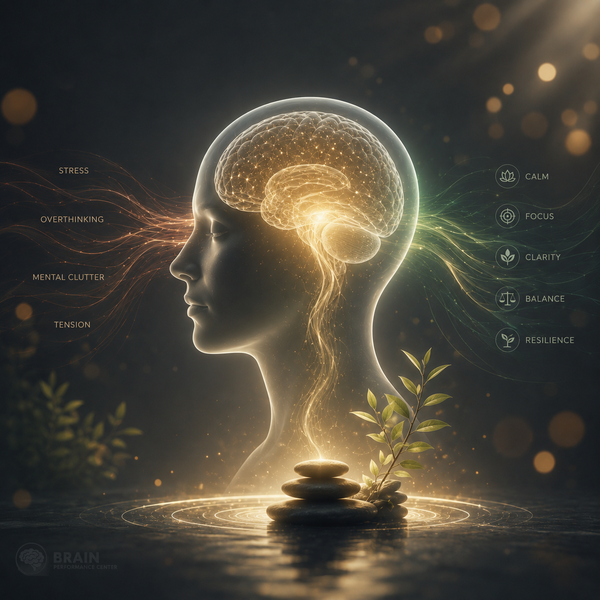
The Brain Does Not Need Perfection. It Needs Repetition.
One of the biggest mistakes people make with wellness is thinking it only counts if they do it perfectly. But the brain learns through repetition. Every time you practice a calming behavior, you are reinforcing a pattern.
That pattern may be: I can pause. I can breathe. I can recover. I can redirect my attention. I can choose my response.
This is especially important for people who live in high-pressure environments. Leaders, parents, students, athletes, caregivers, and professionals often push their brains for long stretches without intentionally regulating. They may not notice stress until it shows up as fatigue, irritability, forgetfulness, emotional reactivity, or difficulty sleeping.
Micro-wellness works because it meets the brain in real life. It does not require a perfect schedule. It can happen between clients, before a meeting, after a hard conversation, or while sitting in the car.
Five Micro-Wellness Habits for Brain Performance
1. The 60-Second Breath Reset
Breathing is one of the fastest ways to communicate with the nervous system. When we are stressed, breathing often becomes shallow or rapid. When we intentionally slow the breath, especially the exhale, we send the body a different message.
Try this: inhale through the nose for four counts, exhale slowly for six counts, and repeat for one minute. You do not need to force relaxation. Simply lengthen the exhale. This can help shift the body away from high-alert activation and toward regulation.
2. The Brain-Body Scan
Stress often shows up in the body before we consciously recognize it. The shoulders rise. The jaw tightens. The stomach contracts. The hands grip. The breath shortens.
A brain-body scan helps you notice what your body is telling you. Ask yourself: Where am I holding tension? What is my breathing doing? Is my body bracing? Can I soften one area by ten percent?
You are not trying to eliminate every sensation. You are building awareness. Awareness gives the brain more information, and more information creates more choice.
3. The Attention Reset
The modern brain is constantly pulled by screens, notifications, unfinished tasks, and environmental noise. Attention is not unlimited. Every interruption has a cost.
A simple attention reset can be done in less than two minutes. Look away from your screen. Pick one object in the room. Notice its color, shape, texture, and edges. Let your eyes stay with it. Take three slow breaths.
This gives the brain a break from rapid task switching. It also helps bring attention back to the present moment.
4. The Gratitude Anchor
Gratitude is not about pretending everything is positive. It is about helping the brain notice what is still stable, meaningful, supportive, or good. Gratitude interventions have been associated with improvements in gratitude, mental health, and well-being in systematic reviews, though effects vary by person and practice.
Try this: name one thing that supported you today, one thing your body did for you today, and one person, place, or moment that helped you feel connected.
Keep it specific. “I am grateful for my family” is meaningful, but “I am grateful my daughter laughed with me at breakfast” gives the brain a clearer emotional memory to hold.
5. The Transition Pause
Many people carry stress from one moment into the next without realizing it. They leave one meeting and immediately enter another. They finish a difficult call and open their inbox. They move from work to home without allowing the nervous system to transition.
A transition pause is a short ritual that tells the brain: that moment is complete, and this next moment is new.
Before moving into the next task, pause, exhale, drop your shoulders, and ask: What does this next moment require from me?
This builds executive control. Instead of reacting from the residue of the previous moment, you are choosing how to enter the next one.
Micro-Wellness and Emotional Regulation
Emotional regulation is not the absence of emotion. It is the ability to notice what is happening internally and respond in a way that supports your goals, values, and relationships.
When the nervous system is overloaded, emotional regulation becomes harder. The brain may interpret neutral events as threatening. A short email may feel critical. A delay may feel like rejection. A mistake may feel catastrophic.
Micro-wellness practices help by lowering the intensity of activation before the brain reaches a tipping point. This is especially helpful for individuals with anxiety, ADHD, trauma histories, sleep disruption, chronic stress, or high-pressure responsibilities.
The goal is not to be calm all the time. The goal is flexibility. Can your brain activate when needed and recover when the demand passes?
When Micro-Wellness Is Not Enough
Micro-wellness is helpful, but it is not a substitute for professional support when symptoms are persistent or disruptive. If you are experiencing ongoing anxiety, depression, attention difficulties, panic, sleep disruption, emotional outbursts, or burnout, a more comprehensive brain-based assessment may be appropriate.
At Brain Performance Center, we look at symptoms through a functional brain health lens. We consider attention, emotional regulation, stress tolerance, sleep, cognitive performance, and nervous system patterns. Depending on the person, support may include counseling, neurofeedback, biofeedback, neuromodulation, executive function coaching, or other individualized interventions.
Start Small Today
You do not need to change your whole life to begin supporting your brain. Start with one micro-wellness habit. Practice it three times a day for one week.
One minute of breathing. One transition pause. One gratitude anchor. One attention reset. One body scan.
Small habits become signals. Repeated signals become patterns. Patterns shape how the brain responds to stress.
Your brain is always learning. The question is: what are you teaching it today?
What This Looks Like in Real Life
Micro-wellness works best when it is connected to moments that already exist in your day. You might practice the breath reset before walking into the office, use the attention reset after a long screen session, or take a transition pause before shifting from work to family time. The goal is not to add another demanding task to your schedule. The goal is to attach a brief recovery signal to something you already do.
Over time, these small practices can become part of how your brain prepares, performs, and recovers. They help you notice stress earlier, respond with more intention, and protect your mental energy before the day becomes overwhelming.
Take the First Step Toward Better Brain Health
If stress, anxiety, attention challenges, or emotional overload are affecting your daily life, Brain Performance Center can help you better understand your brain and build a personalized plan for regulation, resilience, and performance.
References
[1] National Center for Complementary and Integrative Health. Meditation and Mindfulness: Effectiveness and Safety.
[2] Cregg, D. R., & Cheavens, J. S. Gratitude Interventions: Effective Self-Help? A Meta-Analysis of the Impact on Symptoms of Depression and Anxiety.