
If your child has ADHD, you already know how hard things can get. Homework becomes a fight. Sitting still at dinner feels impossible. Teachers call. Friendships get complicated. And as a parent, you just want to find something that actually helps.
You may have heard about neurofeedback. Maybe another parent mentioned it, or you came across it while searching online at midnight. Either way, you probably have a lot of questions , and that makes complete sense.
At The Brain Performance Center in Dallas, TX, we work with kids with ADHD every day. We have seen what this journey looks like for families. This blog is written for parents who are just starting to learn about neurofeedback and want honest, clear answers before they take any next steps.
So What Exactly Is Neurofeedback
Neurofeedback is a type of brain training. It helps the brain learn to work in a calmer, more focused way , on its own, without medication.
Here is the simple version of how it works:
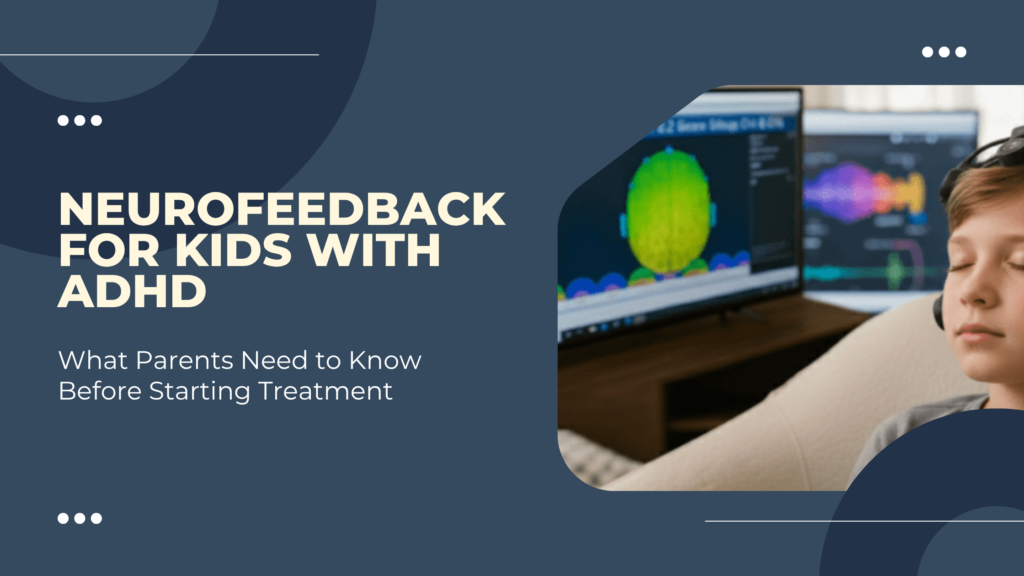
Your child sits in a comfortable chair. Small sensors are placed on their scalp , they do not hurt at all, nothing goes into the skin. These sensors read the electrical activity happening in your child’s brain in real time.
That brain activity gets shown on a screen, usually as a game or a movie. When your child’s brain is producing the right kind of calm, focused waves, the game moves forward or the movie plays clearly. When the brain drifts into the patterns linked to ADHD , like too many slow waves or too much scattered activity , the game pauses or the screen dims.
The brain picks up on this feedback and slowly starts to adjust. Over many sessions, it starts to hold those better patterns on its own.
No shocks. No pain. No drugs. Just the brain learning , the same way a muscle gets stronger when you exercise it.
Why Do Kids with ADHD Have Trouble Focusing
Before we talk more about treatment, it helps to understand what is actually happening in an ADHD brain.
Kids with ADHD are not being lazy or difficult. Their brains are genuinely wired differently. Research shows that in many children with ADHD, certain parts of the brain produce too many slow brainwaves , called theta waves , especially in the front part of the brain, which controls focus and decision-making.
At the same time, there are not enough fast waves , called beta waves , which are the ones the brain needs to pay attention, plan, and stay on task.
This imbalance is not something a child can fix just by trying harder. It is like asking someone with blurry vision to just look more carefully. Without the right tool, trying harder does not fix the problem.
Neurofeedback works directly on this imbalance. It trains the brain to produce more of the waves it needs and fewer of the ones causing the problem.
What Does a Neurofeedback Session Look Like for a Child
A lot of parents ask us this before their child’s first visit because they want to prepare their kids. Here is what to expect:
Before the session: We do a full brain map first, called a qEEG. This shows us exactly what is happening in your child’s brain , where the imbalance is, how strong it is, and what kind of training will help most. We do not guess. We look at the data first.
During the session: Your child sits in a relaxed chair. The sensors go on. A game or movie starts on the screen. The child just watches or plays , no effort required. The brain does the work automatically. Sessions usually last between 30 to 45 minutes.
After the session: Most kids feel calm and a little tired, similar to how you feel after a good workout. Some children feel more alert. Either response is normal.
What We Look for After Early Sessions
- Is your child sleeping better?
- Are they less reactive or emotional over small things?
- Is it easier for them to start tasks?
- Are teachers noticing anything different?
These small signs often show up before parents even realize the training is working.
How Many Sessions Does a Child Usually Need?
This is one of the most common questions we get. There is no single answer that works for every child, but here is a general idea:
| Stage | Typical Sessions | What Usually Happens |
| Early sessions (1–10) | First few weeks | Brain starts adjusting; subtle changes in sleep or mood |
| Middle sessions (10–20) | 4–6 weeks in | Focus and behavior changes become more noticeable |
| Later sessions (20–40) | 2–4 months in | More stable and consistent changes in daily life |
| Maintenance (optional) | As needed | Occasional sessions to keep progress on track |
Most children see real, noticeable changes somewhere between 20 and 40 sessions. Some kids respond faster. Some take a little longer. It depends on the child’s brain, how severe the ADHD is, and other factors like sleep, diet, and home environment.
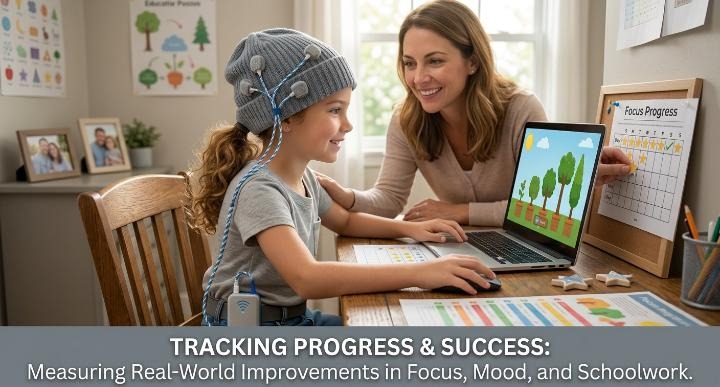
We track progress every step of the way so nothing is guesswork.
Is Neurofeedback Safe for Children?
Yes. Neurofeedback has been studied and used with children for over 50 years. The sensors only read brain activity , they do not send anything into the brain. There are no side effects like you would get with medication.
Some children feel a little tired after sessions, especially early on. This is a normal sign that the brain is working. It usually goes away within an hour or two.
There are no needles, no electricity going into the body, and no chemicals involved. It is one of the safest options available for children with ADHD.
Neurofeedback vs. ADHD Medication: An Honest Comparison
We are not here to tell you that medication is bad. For some children, medication plays an important role. But many parents come to us because they want to understand all of their options before making a decision. Here is a side-by-side look:
| Neurofeedback | ADHD Medication | |
| How it works | Trains the brain to self-regulate | Changes brain chemistry temporarily |
| Results last after stopping? | Yes, in most cases | No , effects stop when medication stops |
| Side effects | Minimal (mild tiredness early on) | Can include appetite loss, sleep issues, mood changes |
| Time to see results | Weeks to months | Often within days |
| Addresses root cause? | Yes | No , manages symptoms only |
| Requires ongoing use? | No (once trained) | Yes, typically long-term |
Some families choose neurofeedback alone. Others use it alongside medication and find they can reduce the medication dose over time. We work with each family individually and do not push any one path.
What Can Neurofeedback Help With Beyond Focus?
ADHD rarely shows up as just one problem. Most kids with ADHD also deal with other challenges. Neurofeedback often helps with several of these at the same time:
- Sleep problems , Many kids with ADHD have trouble falling asleep or staying asleep. Neurofeedback often improves this within the first few weeks.
- Anxiety , A large number of children with ADHD also have anxiety. The brain training helps calm the nervous system overall.
- Emotional outbursts , meltdowns over small things, big reactions to frustration , these often soften as the brain learns to regulate itself.
- Homework and reading , When focus improves, sitting down to do work gets easier.
- Social situations , Impulsivity in friendships often decreases as the brain gets better at pausing before reacting.
Signs That Your Child Might Be a Good Fit for Neurofeedback
Not every child needs neurofeedback, and we always do a proper assessment before starting. But here are some signs that parents bring up most often when they reach out to us:
- ADHD diagnosis already confirmed but current treatment is not fully working
- Child is on medication but still struggling in school
- Parents want to avoid medication or reduce dependency on it
- Child also has anxiety, sleep issues, or emotional regulation problems
- Child has tried therapy but still cannot hold focus
- School accommodations are helping but not enough
If any of these sound familiar, it is worth having a conversation with us.
What Makes The Brain Performance Center Different
We are based in Dallas, TX, and we work specifically with brain-based challenges , not general therapy, not general wellness. This is all we do.
Here is what that means for your child:
- We start with a full brain map (qEEG) so we know exactly what we are working with before we do anything
- We do not use a one-size-fits-all protocol , every child’s training plan is built around their specific brain data
- We track progress with data throughout the process, not just parent feedback
- Our team has experience working with children who have complex presentations , ADHD alongside anxiety, learning challenges, or emotional difficulties
- We talk to parents at every step so you always know what is happening and why
We believe parents deserve to understand what is going on in their child’s brain , not just be handed a treatment plan without explanation.
A Word to Parents Who Are Feeling Overwhelmed
If you have been fighting for your child for a long time , fighting with the school, fighting with the morning routine, fighting your own guilt about whether you are doing enough , we see you.
ADHD is genuinely hard on the whole family. And there is no perfect, instant fix. Neurofeedback is not magic. It takes time, consistency, and patience. But for many children, it produces real, lasting changes that medication alone could not.
The parents who come to us are not looking for miracles. They are looking for something that actually works , something that helps their child feel good about themselves, do better in school, and have an easier time in the world. That is a completely fair thing to want.
We are here to help you figure out if this is the right step for your family.
How to Get Started with Us
Getting started is simple. You do not need a referral. You just need to reach out.
Here is what the process looks like:
- Call or contact us to schedule a free consultation
- Come in for a brain map (qEEG assessment) so we can look at your child’s specific brain activity
- Review the results together , we go over everything with you so you understand what we found
- Start training if neurofeedback is the right fit , with a customized plan built for your child
We are located in Dallas, TX. If you have questions before booking, we are happy to answer them. There is no pressure, no commitment required just to talk.
The Brain Performance Center , Dallas, TX Real brain data. Real plans. Real results for kids with ADHD.
Questions Parents Often Ask Us
Will my child have to stop taking their medication to do neurofeedback?
No. Your child can continue their current medication while doing neurofeedback. Many families slowly reduce medication over time as the brain improves, but that is always done in coordination with your child’s doctor. We never tell parents to stop medication on their own.
My child is very young. Is there a minimum age?
We work with children as young as 5 years old. Younger brains are actually very flexible and tend to respond well to training. We always adjust the approach based on the child’s age, attention span, and comfort level.
How do I know if my child is actually making progress?
We do brain maps at regular points during the training. You can literally see before and after comparisons of your child’s brainwave patterns. On top of that, we check in with parents regularly to track changes at home and school.
What if my child cannot sit still long enough for a session?
This is something we hear often. The good news is that sessions are designed to feel like playing a game or watching a show. Most kids who struggle to sit at school do just fine in sessions because there is no demand , the brain works on its own. We also have ways to adjust session length for younger or more active children.
Is it covered by insurance?
Some insurance plans cover neurofeedback, especially when there is a formal ADHD diagnosis. We recommend calling your insurance provider and asking about coverage for biofeedback or neurofeedback. Our team can also help you understand what documentation may be needed.