
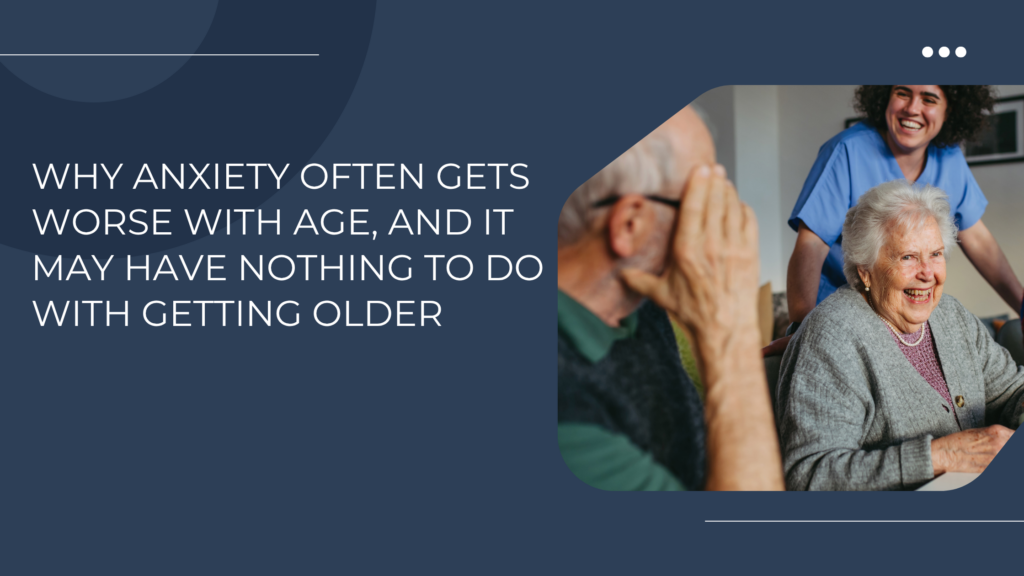
Many people assume that feeling more anxious as they age is simply part of getting older, something to quietly accept along with grey hair and stiffer joints. But growing evidence points to a different explanation entirely, and it’s a far more hopeful one. Rising anxiety in older adults may have less to do with age itself, and much more to do with a decline in deep, slow-wave sleep, the deepest, most restorative stage of the night.
This distinction matters enormously. Age is something you cannot change. Sleep quality, on the other hand, is something you actually can influence, which means a big piece of late-life anxiety may be far more manageable than most people assume.
What Deep, Slow-Wave Sleep Actually Does
Not all sleep is the same. Your body cycles through different stages each night, and one of them, deep slow-wave sleep, does some of the most important restorative work of the entire cycle. This is the stage where the brain clears out waste, consolidates memory, and resets the nervous system for the next day.
As people get older, the amount of deep slow-wave sleep they get each night naturally tends to shrink. Older adults often still get a similar number of total hours in bed, but a smaller portion of that time is spent in this deep, restorative stage. On the surface, sleep can look fairly normal, while the quality of it is quietly declining underneath.
This matters because slow-wave sleep plays a direct role in regulating the nervous system and calming the body’s stress response. When this stage of sleep shrinks, the nervous system loses one of its main nightly opportunities to properly reset, and that loss appears to be closely tied to rising anxiety levels, more so than age on its own.
Why This Changes How We Should Think About Anxiety in Older Adults
For a long time, rising anxiety in later life has often been treated as an inevitable part of aging, something to simply live with. This is a meaningfully different way to look at it. If declining deep sleep is a bigger driver of anxiety than age itself, then anxiety in older adults may be far more responsive to targeted support than people assume.
This reframes the entire approach. Instead of treating anxiety in older age as something to just manage or accept, it points toward a more specific, addressable cause: the quality of deep sleep. And unlike the aging process itself, sleep quality can often be improved with the right approach.
Why This Doesn’t Mean “Just Sleep More”
It’s important to be clear about what this actually means. This isn’t about simply spending more hours in bed. Many older adults already spend enough time asleep, but the deep, restorative stage within that sleep has quietly shrunk. Adding more hours of light or fragmented sleep won’t fix that. What matters is the depth and quality of sleep, not just the total time spent in bed.
This is also why generic sleep advice, like “go to bed earlier” or “avoid caffeine,” while genuinely helpful, often isn’t enough on its own to meaningfully restore lost deep sleep. Supporting this specific stage of sleep usually requires a more targeted approach.
How to Support Deeper, More Restorative Sleep
A few consistent habits are known to support deeper, more restorative sleep over time.
Keep a consistent sleep and wake time. Going to bed and waking up at the same time every day, even on weekends, helps stabilize the body’s internal rhythm, which supports deeper sleep cycles.
Get real daylight earlier in the day. Natural light exposure during the day, especially in the morning, helps regulate the body’s internal clock, which in turn supports better sleep quality at night.
Limit alcohol in the evening. Alcohol can make you feel sleepy, but it actually reduces the amount of deep slow-wave sleep you get, working directly against the stage that matters most here.
Keep your bedroom cool and dark. A cooler room temperature supports the body’s natural drop in temperature needed to enter deeper sleep stages.
Move your body during the day. Regular physical activity is consistently linked with improved sleep depth and quality, particularly in older adults.
Wind down without screens before bed. Light from phones and screens close to bedtime can interfere with the body’s ability to transition into deeper sleep stages.
These habits help, but for many older adults dealing with persistent anxiety, habit changes alone aren’t always enough to fully restore what’s been lost. This is where more targeted support can make a real difference.
A More Targeted Approach to Sleep and Anxiety
This is exactly the kind of connection addressed at The Brain Performance Center in Dallas, Texas, led by Dr. Leigh Richardson. Rather than treating anxiety and poor sleep as separate, unrelated issues, the center looks at how the brain’s own regulation patterns affect both, using tools like Neurofeedback and LENS (Low Energy Neurofeedback System).
Neurofeedback works by measuring your brainwave activity and feeding that information back to your brain in real time. Over repeated sessions, this helps the brain learn to settle into calmer, more balanced patterns, patterns closely tied to both deeper, more restorative sleep and reduced anxiety during waking hours.
LENS offers a gentler, more passive approach to the same goal. A small sensor placed on the scalp reads brainwave activity, and a brief, low-energy signal interrupts an overactive pattern found underneath it. People often report calmer minds and noticeably improved sleep after just a handful of sessions, without needing to actively work at relaxing during the session itself.
For older adults whose anxiety may be more closely tied to declining sleep quality than to age itself, this kind of targeted brain-based support can address the actual underlying pattern, rather than simply managing the anxiety symptoms on the surface while the sleep problem underneath goes unaddressed.
Why This Matters More Than Most People Realize
This shifts the entire conversation around anxiety in older age. Instead of an inevitable part of getting older, worsening anxiety may be much more closely connected to something specific and addressable: the quality of deep, restorative sleep.
This is genuinely encouraging news. It means that for many older adults, rising anxiety isn’t simply something to accept as an unavoidable part of aging. It may be a sign that the brain’s deep sleep and nervous system regulation need real support, and that support is something that can actually be pursued and improved.
Frequently Asked Questions
Is anxiety in older adults always caused by poor sleep?
Not always, but declining deep, slow-wave sleep appears to be a significant and often overlooked factor, sometimes more closely tied to rising anxiety than age itself. Other causes, including medical conditions and life circumstances, can also play a role and should be properly evaluated.
How do I know if I’m getting enough deep sleep?
Total hours in bed don’t tell the whole story. Signs of reduced deep sleep can include waking up feeling unrefreshed even after a full night, increased daytime anxiety, and feeling mentally foggy despite adequate sleep time. A sleep study or professional evaluation can give a clearer picture.
Can improving sleep actually reduce anxiety in older adults?
Improving the quality and depth of sleep appears to be closely connected to lower anxiety levels. While sleep alone may not resolve every case of anxiety, addressing declining deep sleep can meaningfully support overall anxiety levels for many older adults.
Is this different from general age-related sleep changes?
Yes. General age-related sleep changes are often accepted as inevitable, while this points to a specific, addressable factor, the depth and quality of sleep, that can potentially be improved rather than simply endured.
Can Neurofeedback help with sleep-related anxiety specifically?
Neurofeedback is used to help the brain build steadier, more regulated patterns, which are closely connected to both improved sleep quality and reduced anxiety. It addresses the underlying brain regulation rather than only the surface symptoms.
Should older adults with anxiety get a sleep evaluation?
If anxiety has been increasing and sleep quality feels off, even if total sleep time seems adequate, a professional evaluation can help identify whether declining deep sleep is playing a role, and what targeted support might help.
Is it normal for deep sleep to decline with age?
Some natural decline in deep sleep is common with age, but a significant drop, especially one linked to noticeably worsening anxiety, is worth addressing rather than simply accepting as unavoidable.